Wait Time for Kids: A K–8 Questioning Guide
A few protected seconds can change a question from a race for the fastest answer into an invitation for every learner to think.
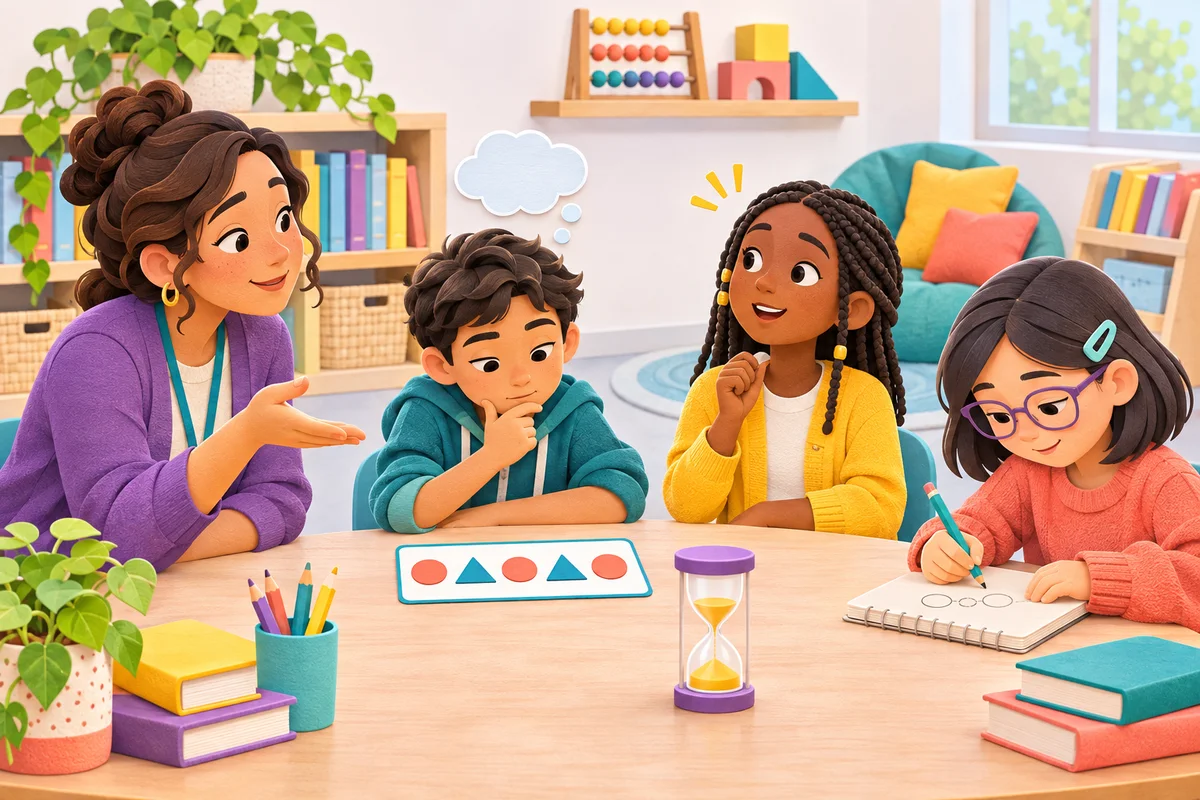
The IRIS Center at Vanderbilt University defines wait time as the pause between a question and a learner’s response, or between the response and the adult’s next move. Its classroom guidance uses three to five seconds as a practical starting range. This is not a magic countdown. It is a way to communicate, “I expect thinking, and I will not answer my own question for you.”
Use an Ask–Pause–Listen–Pause–Probe routine
- Ask one clear question. Prefer a prompt that calls for noticing, reasoning, evidence, or connection—not three questions bundled together.
- Pause visibly. Say, “Take a moment,” then keep your face and body calm. Silently count, watch a small timer, or invite everyone to jot or draw.
- Listen to the whole response. Avoid finishing the child’s sentence, correcting the first word, or turning immediately to someone faster.
- Pause again. A learner who appears finished may add the most useful detail after a short silence.
- Probe gently. Try “What makes you think that?”, “Can you show it another way?”, or “Which clue helped you?”
The U.S. Department of Education’s practice guide on instruction and study recommends questions that invite explanation, while a 2025 REL Central questioning resource pairs think time with structured discussion. The quality of the prompt matters: waiting longer after a yes-or-no question does not automatically create deeper thinking.
What wait time looks like across K–8
K–2: notice, point, draw, then tell
Show a picture pattern and ask, “What do you notice?” Give silent time before taking hands. A child may point to a repeated shape, copy the next part, or whisper an idea to a partner before speaking. For early learners, movement and drawing are valid thinking tools—not detours from the answer.
Grades 3–5: predict before calculating or reading on
Before solving a word problem, ask, “Will the answer be greater or less than 100? Why?” In reading, stop before a turning point and ask which detail supports a prediction. Let everyone write one clue before discussion. This prevents the first confident voice from becoming the class’s thinking process.
Grades 6–8: compare claims and evidence
Present two possible explanations for a science result, historical decision, or math strategy. Ask learners to choose, cite one piece of evidence, and name what information would change their mind. Give individual think time before partner or whole-group talk so students arrive with an idea of their own.
Use the same routine at home
Adults often speed up when homework or routines feel urgent. Try asking one question—“What is the first step?”—and waiting without touching the pencil. During reading, ask, “What changed in this section?” and let the child look back. After a Focusplay round, pause before offering a hint: “What did you notice about the choices?” The aim is not to withhold help; it is to discover what the child can start independently.
For discussion, the IES guide for teaching English learners recommends frequent opportunities to process content in pairs or small groups. A child can think silently, rehearse with one person, and then decide what to share. This sequence can be especially useful when speaking in front of a group adds language or social demand.
Common mistakes to avoid
- Rephrasing immediately: Each new version may restart processing. Wait first; simplify only if needed.
- Filling the silence with clues: A stream of hints turns thinking time into listening time.
- Calling only on the first hand: Tell the group that everyone will think before anyone answers.
- Using silence as pressure: Keep the pause warm and predictable. Do not stare, sigh, or count down publicly.
- Requiring speech every time: Let learners point, sort, draw, write, or build when those modes reveal understanding better.
Wait time works well with our guides to asking better questions, helping kids explain their thinking, and giving multi-step directions. In Focusplay activities, adults can use the same pause before a hint and invite a brief explanation after a choice.
Practical takeaway
Choose one conversation today. Ask one clear question, silently count to five, listen without rescuing, pause once more, and ask one gentle follow-up. If five seconds feels long, that is useful information: the adult—not only the child—is learning a new routine.
Frequently asked questions
What is wait time in teaching?
Wait time is a deliberate pause after an adult asks a question and, often, a second pause after a learner finishes speaking. The pauses protect time for processing, forming a response, and adding detail.
How long should an adult wait after asking a child a question?
A useful starting point is three to five seconds. A complex prompt, a new language, or a learner who needs additional processing time may call for a longer pause or a chance to draw, jot, or talk with a partner first.
Should I repeat the question during the pause?
Not immediately. Repeating or rephrasing too soon can restart the child’s processing. First hold a quiet pause; if the child still needs support, shorten the question, show it visually, or ask what part is unclear.
What if a child says “I don’t know”?
Acknowledge the response without ending the thinking. Offer a smaller entry point such as choosing between two ideas, drawing what they notice, recalling one fact, or hearing a partner’s idea before trying again.
Does wait time mean every child must answer aloud?
No. Thinking can be shown by speaking, pointing, drawing, writing, building, or selecting an example. The goal is meaningful processing and participation, not forcing a public response.
Sources
- IRIS Center: Wait-Time Fundamental Skill Sheet
- REL Central: Using Questioning Strategies to Promote Student Thinking
- What Works Clearinghouse: Organizing Instruction and Study to Improve Student Learning
- What Works Clearinghouse: Teaching Academic Content and Literacy to English Learners
- REL Southeast: Toolkit for Teaching K–3 Reading Comprehension